

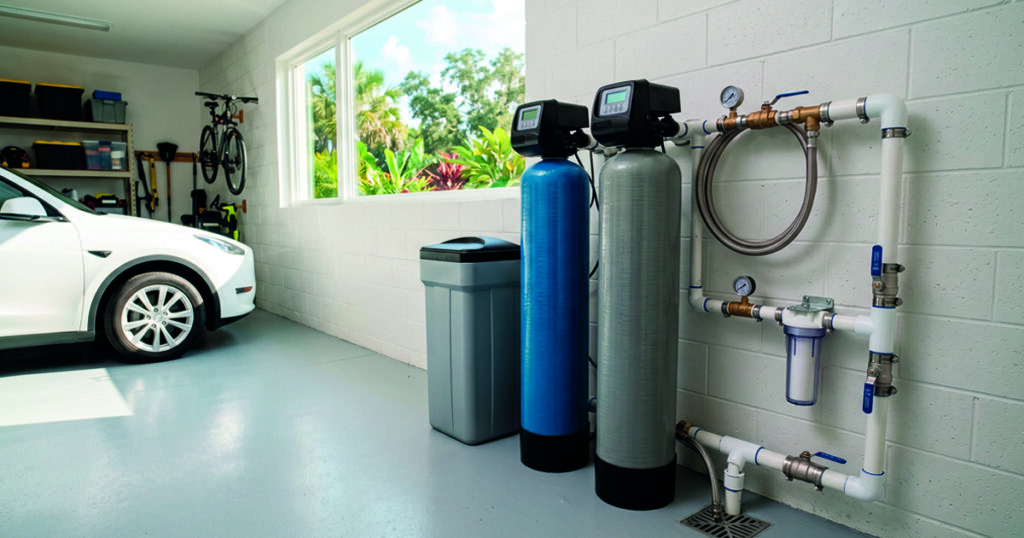
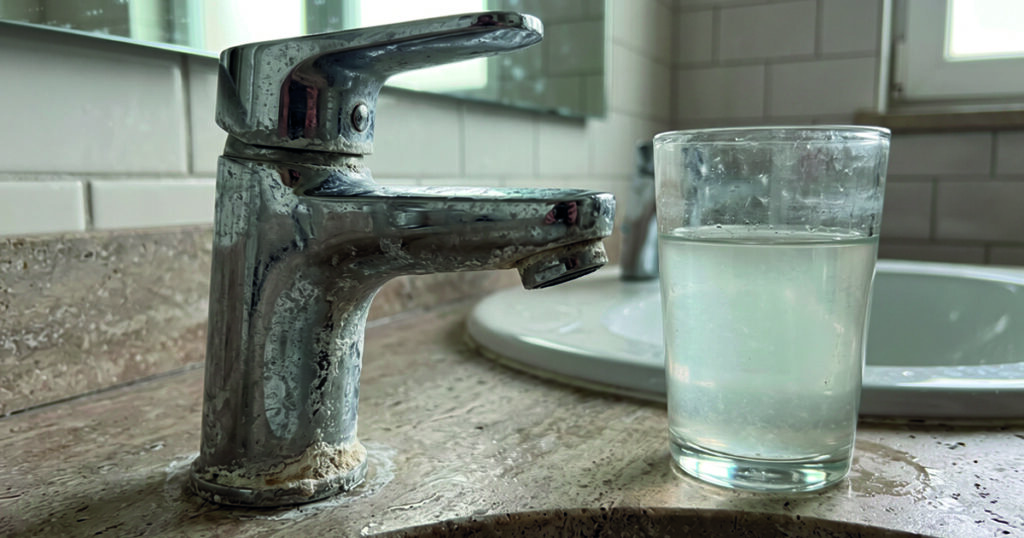
When you turn on the faucet in your Central Florida home, you might notice white crusty spots on your fixtures, dry skin after showering, or a sharp chemical odor resembling a swimming pool. These daily annoyances stem from the region’s complex water supply. Central Florida draws its water primarily from the deep limestone layers of the Floridan Aquifer. While this groundwater source is abundant, it is heavily saturated with calcium, magnesium, and dissolved minerals. Additionally, municipal water suppliers treat the supply with chlorine and chloramines, leaving behind harsh tastes and chemical smells.
As a homeowner, protecting your plumbing and improving your tap water quality often leads to a common question: should you install a water softener or a water conditioner? Although these terms are frequently used interchangeably, water softeners and water conditioners perform fundamentally different tasks. Understanding the difference between a water softener vs water conditioner in Central Florida is essential for making an informed decision that protects your investment and ensures crystal-clear water throughout your household.
Understanding Central Florida’s Unique Water Supply
To select the ideal filtration setup, you must first understand what flows through your pipes. Groundwater filtered through Florida’s porous limestone gathers high concentrations of calcium carbonate and magnesium. This creates hard water, which forms limescale inside pipe walls, clogs showerheads, and damages heating elements in water heaters, washing machines, and dishwashers.
At the same time, municipal water treatment facilities add significant amounts of disinfectant chemicals to kill bacteria during distribution. While necessary for public health, municipal chlorine reacts with organic matter, imparting a bitter chemical taste and odor. Homes relying on private wells face additional challenges, including dissolved sulfur gases that cause rotten egg smells and dissolved iron that leaves rust-colored stains on laundry and plumbing fixtures. Because water problems in Central Florida range from mineral hardness to chemical contamination, choosing between physical softening and chemical conditioning depends entirely on your water quality.
What Is a Water Softener and How Does It Work?
A true water softener is designed with a single primary goal: removing hard water minerals through a process known as ion exchange. Hardness in water is measured in Grains Per Gallon (GPG) or Parts Per Million (PPM). In Central Florida, water hardness often exceeds 10 to 15 GPG, categorizing it as very hard to extremely hard.
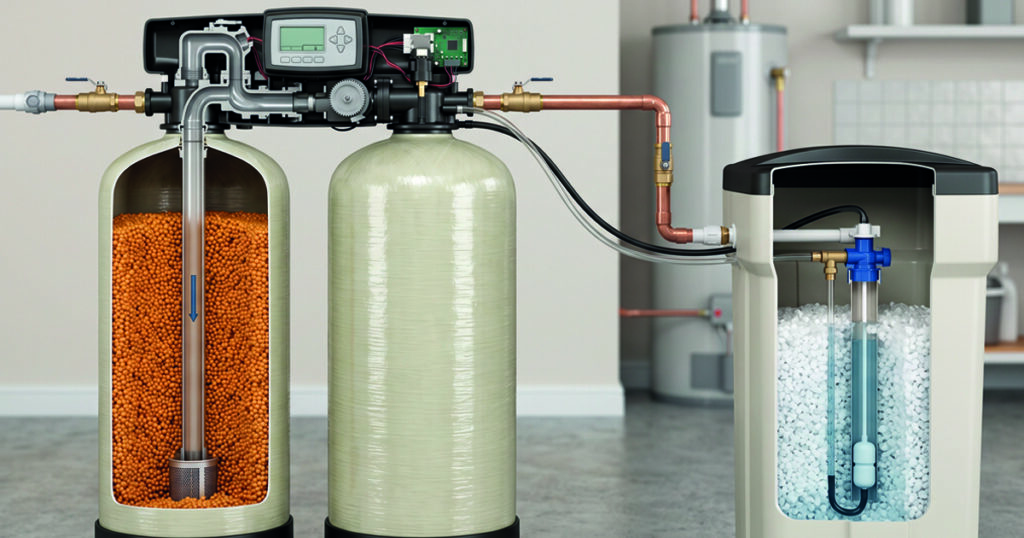
A traditional salt-based water softener consists of a resin tank filled with microscopic polystyrene beads and an adjacent brine tank filled with salt. The resin beads hold a negative electrical charge and are saturated with positively charged sodium or potassium ions. As hard water enters the system, the positively charged calcium and magnesium ions are attracted to the resin beads like a magnet. The resin traps these hardness minerals and releases harmless sodium ions into the water stream in exchange.
Once the resin beads become saturated with calcium and magnesium, the system automatically enters a regeneration cycle. Salty brine from the brine tank flushes through the resin bed, stripping away accumulated hard water minerals and washing them down the drain. The result is completely softened water. By eliminating hardness minerals, a water softener stops scale accumulation, protects major appliances, lowers energy bills, and allows soaps to lather effortlessly. For homeowners seeking robust hard water defense, investing in specialized residential water systems provides complete protection against scale damage.
What Is a Water Conditioner and How Does It Work?
While a water softener physically removes calcium and magnesium ions, a water conditioner focuses on altering water quality to improve taste, odor, and chemical balance, or changing how minerals behave in your plumbing system.
In the water treatment industry, water conditioning encompasses two primary technologies:
- Carbon Media Conditioning & Filtering: High-grade catalytic carbon or coconut-shell activated carbon media absorbs municipal chlorine, chloramines, volatile organic compounds (VOCs), hydrogen sulfide gases, and unpleasant odors. This transforms tap water into refreshing drinking water throughout the entire house.
- Template-Assisted Crystallization (TAC) / Salt-Free Conditioning: Salt-free water conditioners do not remove minerals from water. Instead, they use physical media to transform dissolved calcium and magnesium ions into microscopic, inert crystal structures. These micro-crystals remain suspended in the water flow without adhering to pipe walls or fixture surfaces, reducing scale buildup without requiring salt or backwash cycles.
Water conditioners excel at addressing chemical contaminants, chlorine vapors in hot showers, and unpleasant odors. However, because salt-free conditioners do not actually remove minerals, they do not produce the slick, soap-lathering benefits of a true water softener. For comprehensive defense, many Florida homeowners opt for mixed-bed processor units—combining ion-exchange resin with coconut-shell activated carbon—to enjoy both softening and conditioning in a single system. Exploring advanced water purification systems ensures your home receives both chemical filtration and mineral management.
Water Softener vs. Water Conditioner: Key Differences
To help you compare a water softener vs water conditioner in Central Florida, here is how both systems stack up across key categories:
- Primary Purpose: A water softener removes hardness minerals (calcium and magnesium). A water conditioner neutralizes chemicals (chlorine, chloramines), eliminates sulfur odors, or alters mineral structure to prevent scale.
- Technology Used: Softeners utilize ion exchange with resin beads and salt brine regeneration. Conditioners utilize activated carbon media absorption or TAC/salt-free catalytic media.
- Mineral Removal: Softeners achieve complete removal of dissolved calcium and magnesium. Conditioners do not remove minerals; they either trap chemical contaminants or alter mineral crystallization.
- Soap & Lather Impact: Softeners restore soap efficiency, preventing soap scum and leaving skin feeling soft. Conditioners do not alter water softness or soap lathering capability.
- Maintenance Requirements: Softeners require periodic salt replenishment in the brine tank. Conditioners require carbon filter media replacement every few years depending on water usage.
Which System Is Right for Your Central Florida Home?
Choosing between these two technologies depends on your home’s water source and your daily priorities:
- Choose a Water Softener if: You have heavy limescale on faucets, stiff laundry, dry skin, cloudy shower doors, and want to maximize the lifespan of your water heater and appliances.
- Choose a Water Conditioner if: Your primary complaint is strong municipal chlorine odor, chemical taste, or rotten egg sulfur smells, and mineral scale is a secondary concern.
- Choose a Combined Softener & Conditioner System if: You want the ultimate solution. A mixed-bed system removes calcium and magnesium while simultaneously filtering out chlorine, heavy metals, and organic odors across your entire home.
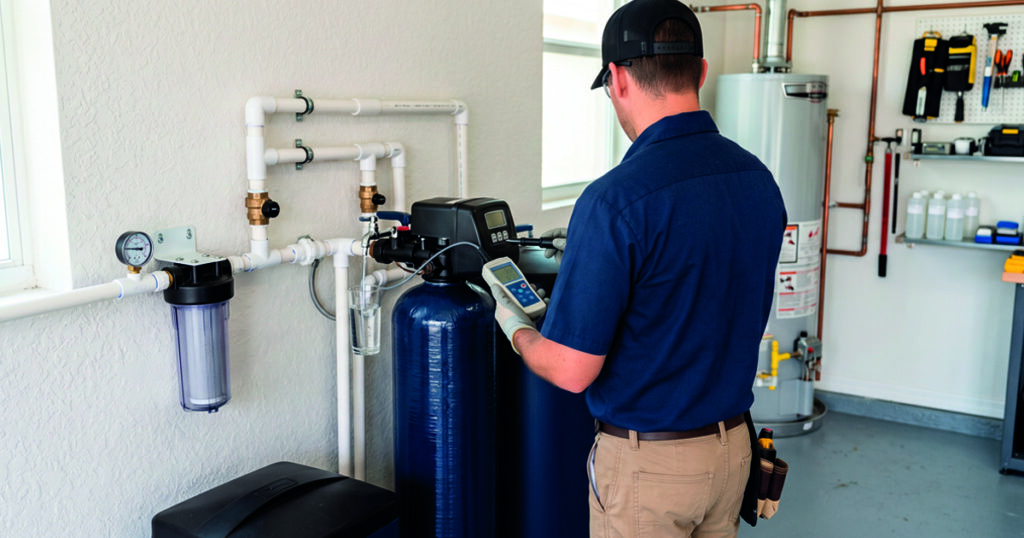
Because water quality varies dramatically from neighborhood to neighborhood across Seminole, Orange, Volusia, and Osceola counties, a professional analysis is the best starting point. Through our comprehensive professional water treatment services, our local experts analyze your water’s exact hardness levels, pH, chlorine content, and total dissolved solids.

Protect Your Home with Central Florida Water Treatment Inc.
Investing in the right water treatment setup protects your household infrastructure, saves money on appliance repairs, and elevates your daily living standard. Whether you need a dedicated water softener, a powerful carbon conditioner, or a complete well water treatment setup, custom engineering ensures lasting results.
Ready to eliminate hard water spots and chemical odors for good? Schedule your free in-home water test today, or contact Central Florida Water Treatment Inc. to speak with a knowledgeable specialist.