

Introduction: Why Does Your Tap Water Look Cloudy?
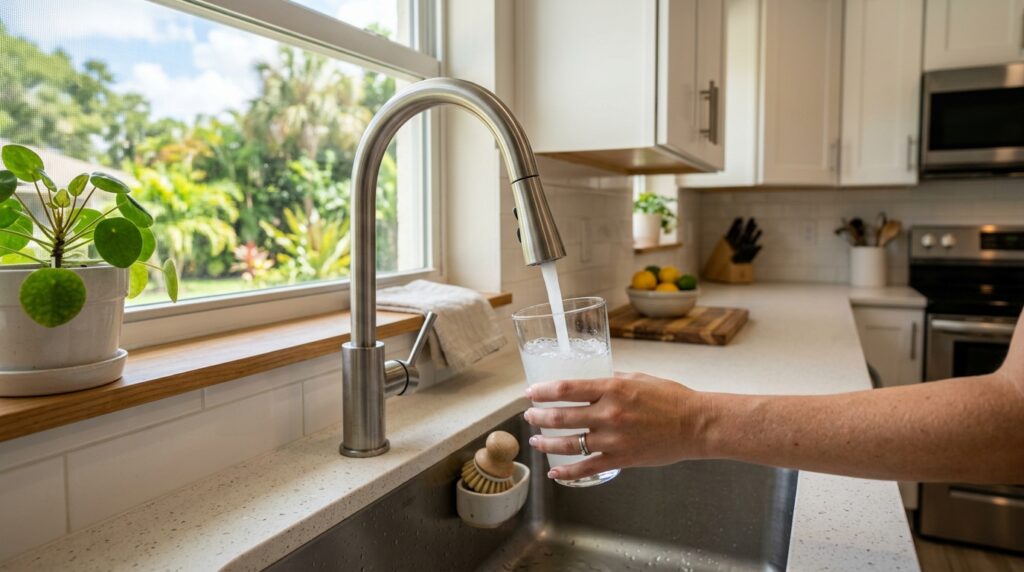
Have you ever turned on your kitchen faucet, filled a glass with water, and noticed that it looked white, cloudy, or almost like milk? If so, you are not alone. Changes in water appearance can be surprising, especially when you expect the water coming from your tap to be completely clear.
For homeowners in Central Florida, cloudy tap water can have several possible explanations. Sometimes, the appearance is caused by tiny air bubbles that disappear naturally. In other situations, suspended particles, mineral deposits, plumbing conditions, or other water-quality issues may be involved.
Understanding the difference is important before deciding whether your home needs a water treatment solution.
In this guide, we explain the most common causes of cloudy water, how to identify potential problems, and when professional water testing can help you understand what is happening inside your home’s plumbing system.
- What Causes Cloudy Tap Water?
One of the most common explanations for white or milky-looking water is the presence of microscopic air bubbles.
Water moving through pressurized pipes can contain dissolved gases. When it leaves the faucet and enters an open glass, changes in pressure allow some of that air to form tiny bubbles. These bubbles make the water appear cloudy, even though the appearance may disappear after a short time.
Other possible explanations include:
- Air trapped in plumbing: Recent plumbing work or changes in the water distribution system can introduce air into pipes.
- Mineral deposits: Certain dissolved minerals can contribute to particles or deposits that affect water clarity.
- Sediment: Fine particles may enter the water from plumbing components or the distribution network.
- Water heater conditions: Mineral accumulation or plumbing-related issues can sometimes affect the appearance of hot water.
Identifying the actual cause is important because each situation requires a different approach.
- The Simple Glass Test: Is It Air or Something Else
Before assuming that your water has a filtration problem, there is a simple observation you can make.
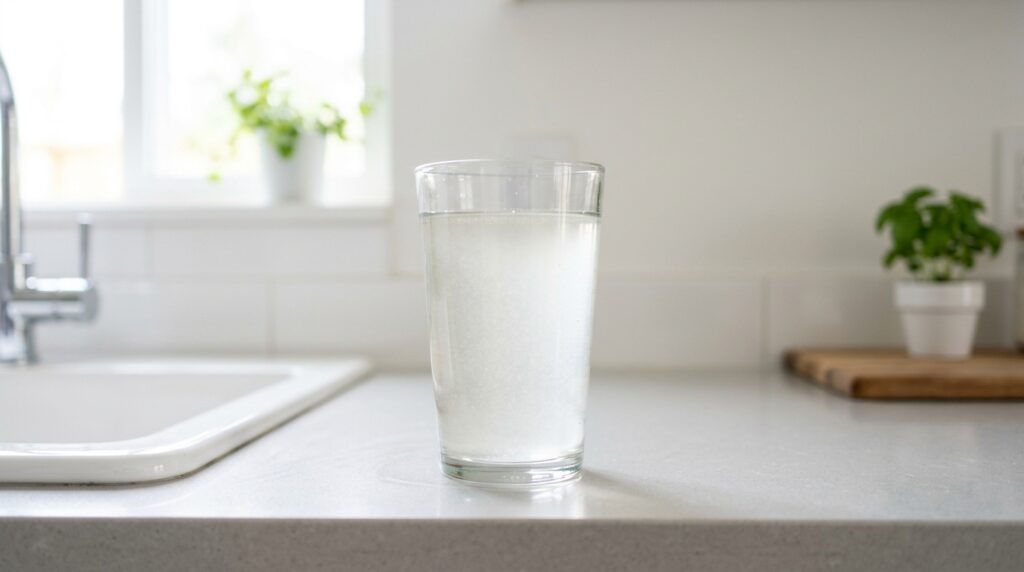
Fill a clean, transparent glass with cold tap water and leave it undisturbed for a few minutes.
Watch what happens:
If the water clears from the bottom upward: This usually indicates that tiny air bubbles are rising and escaping from the water. This is a common physical phenomenon and is generally harmless when air bubbles are the only cause.
If the cloudiness remains: There may be another explanation, such as suspended particles or other water-quality conditions that deserve further investigation.
If visible particles settle at the bottom: This may indicate sediment or mineral material rather than trapped air.
The U.S. Geological Survey explains that cloudy-looking water that clears as bubbles rise is commonly caused by air released from pressurized water.
U.S. Geological Survey+1
Remember that this glass test is only an initial observation. It cannot identify specific contaminants or establish whether water is safe to drink.
- Can Cloudy Water Be a Sign of a Water Quality Problem?
Not every cloudy water situation indicates contamination. However, persistent changes in appearance should not be ignored.
In some homes, water may contain dissolved minerals, fine sediment, or other substances that affect its clarity.
For example, calcium and magnesium are naturally occurring minerals associated with water hardness. Iron and manganese can also be present in certain groundwater supplies and may contribute to visible deposits or staining.
The source of the water makes a difference.
Municipal water: Homes connected to public water supplies receive treated water, but changes in the distribution network, plumbing conditions, or other factors can sometimes affect the appearance of water at the tap.
Private well water: Homeowners using private wells have additional responsibility for monitoring their water quality. Groundwater characteristics can vary depending on local geological conditions and the well itself.
If cloudy water is accompanied by unusual taste, odor, discoloration, or visible particles, a proper water evaluation is recommended rather than assuming the problem is harmless.
- Why Central Florida Homeowners Should Pay Attention to Their Water

Central Florida homeowners rely on different water sources, including municipal supplies and private groundwater wells.
The characteristics of water can vary from one property to another, even between homes located in the same community.
Factors such as the original water source, plumbing infrastructure, mineral content, and household equipment can influence what homeowners experience when they turn on their faucets.
This is why a generic filtration product may not be the right solution for every property.
A homeowner experiencing cloudy water should first understand whether the issue is related to air, plumbing, sediment, or another water-quality characteristic.
For private well owners in particular, periodic water testing is an important part of responsible household water management.
- How Water Testing Helps Identify the Problem
A professional water analysis provides information that cannot be obtained simply by looking at a glass of water.
Water testing can help identify specific characteristics and substances that may require attention.
Depending on the water source and the concerns reported by the homeowner, an evaluation may include:
- Water hardness and mineral content.
- Iron and manganese.
- Chlorine and other disinfectants in municipal supplies.
- Ammonia, nitrates, and nitrites.
- Other substances relevant to the property’s water source.
The results help determine whether a treatment system is necessary and which technology may be appropriate.
At Central Florida Water Treatment Inc., we customize residential water systems based on individual water analysis results. We also offer a free in-home water analysis to help homeowners better understand their water conditions.
Learn more about our Residential Water Systems and the available solutions for Central Florida homes.
- Can a Water Filtration System Solve Cloudy Water?
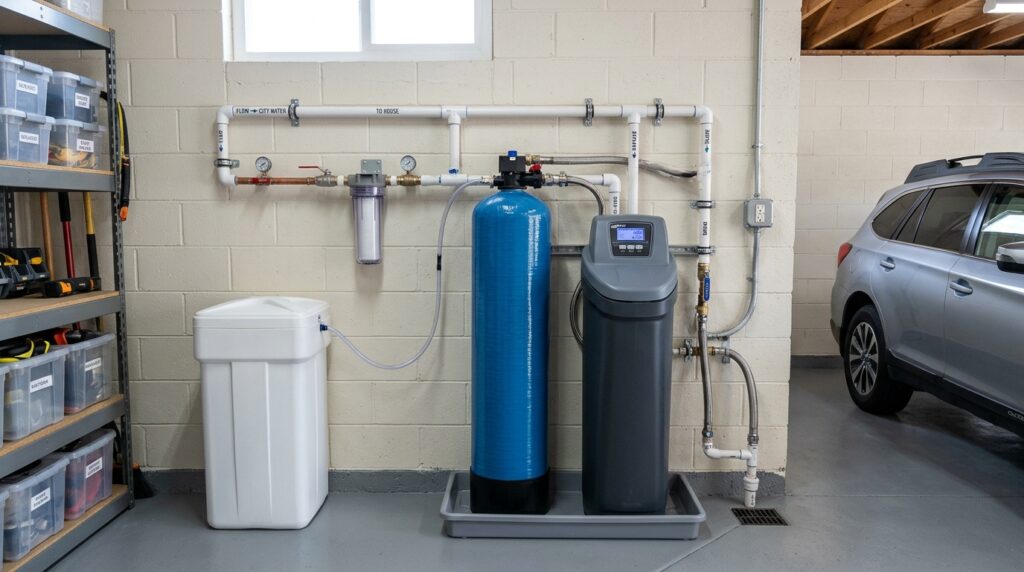
The right water treatment system can help address certain water-quality issues, but the solution depends entirely on what is causing the problem.
For example:
Sediment filtration: Designed to capture suspended particles of different sizes, depending on the filter specifications.
Water conditioning systems: Can address certain mineral-related issues, depending on the technology and the water analysis results.
Activated carbon filtration: Can help reduce chlorine, certain organic compounds, and unwanted tastes and odors, depending on the system design.
Reverse osmosis: Uses a specialized membrane to reduce many dissolved substances in drinking water.
At Central Florida Water Treatment Inc., residential solutions include the Silver Series, Gold Series, Gold Series Plus, and five-stage reverse osmosis systems.
Each system serves a different purpose. Choosing the appropriate equipment requires understanding the specific water conditions of the home.
Explore our Water Purification Services to learn more about available residential treatment options.
- When Should You Contact a Water Treatment Professional?
If your water occasionally looks cloudy but becomes completely clear after standing in a glass, air bubbles may be the explanation.
However, professional evaluation is advisable when:
- Cloudiness continues instead of clearing.
- You notice unusual odors or tastes.
- Water contains visible particles or sediment.
- Your water changes color.
- The problem occurs repeatedly.
- You rely on a private well and have concerns about water quality.
If the change is sudden, contact your municipal water provider to check for distribution-system issues. If the problem appears limited to your home, a qualified plumbing professional may also need to inspect the plumbing.
If you suspect contamination, do not rely on appearance alone to decide whether the water is safe to drink. Use an appropriate water test and follow guidance from the relevant water provider or public health authority.
Conclusion: Understanding Your Water Is the First Step Toward Better Water Quality

Cloudy tap water can have several causes, ranging from harmless air bubbles to sediment and other water-quality conditions.
The important thing is to understand what is happening before choosing a solution.
For Central Florida homeowners, professional water testing can provide valuable information about their water source and help determine whether filtration or another treatment technology is appropriate.
At Central Florida Water Treatment Inc., we believe every home deserves a water treatment solution designed around its actual needs.
With more than 30 years of experience in the water treatment industry, our team helps homeowners throughout Central Florida find customized solutions for their residential water concerns.